Monday, 27 August 2018

Kasi Vishweshwara Swamy temple: A temple where Saivism and Vaishnavism go hand in hand


CR GOWRI SHANKER


The Kasi Vishweshwara Swamy temple is located 60 kms from Hyderabad.
Shiva lingam in the temple.
     Shiva lingam in the temple.
Hyderabad: Despite the Kakatiya rulers giving importance to Saivism, they were not averse to the spread of Vaishnavism also.

The architectural beauty of the Trikuta temple of Kasi Vishweshwara Swamy, Anantha Padmanabha Swamy (Anantasayana) and Venugopala Swamy, reflect a mix of Saivism and Vaishnavism, at Kalbagoor village in Sangareddy district of Telangana.

The little known 11th to 13th century Kasi Vishweshwara Swamy temple is located 60 kms from Hyderabad and 4 kms from Sangareddy on the banks of River Manjeera, a tributary of River Godavari.

Like other Kakatiya temples, this temple too is an architectural masterpiece and has beautiful architecture like the one in 1000 pillar temple in Warangal. The Kakatiyas ruled over the Telugu country from Orugallu (Warangal) from about 1150 AD to 1323 AD.

According to Dr P.V. Parabrahma Sastry, a scholar in Telugu and Sanskrit and an epigraphist, who did extensive studies on Kakatiyas and other rulers, the Kakatiyas inherited the main architectural style of the Chalukya period. However, the distinct feature of Kakatiya architecture is the display of more indigenous art than adherence to the tenets laid down in the texts on vastu and silpa.


Sri Anantapadmanabha swamy.Sri Anantapadmanabha swamy.

In Trikuta temples they closely followed the architecture of the Chalukyas. They used locally available granite and sandstone for main structures up to the “vimana”, its super structure is built of brick and lime. Black granite is used for pillars, jambs, lintels, decorative motifs and icons.

Though not much record is available on the history or the importance of the Sri Kasi Vishweshwara Swamy temple, it is believed that childless couples, sick people and others used to offer prayers at the temple, put their offerings at the “Ragi” tree (Peepal tree, Ficus religiosa or sacred fig tree) which is no more. However, devotees still throng the temple, especially on Shivaratri day and other auspicious occasions.

“Childless couples and the sick made it a point to offer prayers at this temple and their wishes were fulfilled. Even the temple priest who fell sick and his survival was ruled out by doctors did not lose heart and decided to stay at the temple. He recovered,” says Venkatesham, a local who is active in the affairs of the temple.

“Interestingly, the first sunrays fall at the feet of Anantha Padmanabha Swamy. The temple architecture is similar to the 1000 pillar temple. Thousands visit the temple on Shivaratri and other festivals,” he added.

Department of Heritage, Telangana State took up the renovation of the temple and restored its past glory on the initiative of Director Visalatchy. Then undivided Medak Collector Ronald Ross planned a tourism and cultural centre but it is yet to be taken up.

“It’s a Trikuta temple and consists of a porch in the east, a hall and shrines to the west, north and south of the hall. Each shine has an antarala and a grabhariha. Venugopalaswamy, Vishnu as Anantasayana and Lingam are the icons housed in the three shrines. The walls of the shrine are constructed of large blocks of stone. The shrines have stepped pyramidal type of sikharas. These temples belong to the Kakatiya period,” B. Narayana, Deputy Director (Engg) of the department told this newspaper.

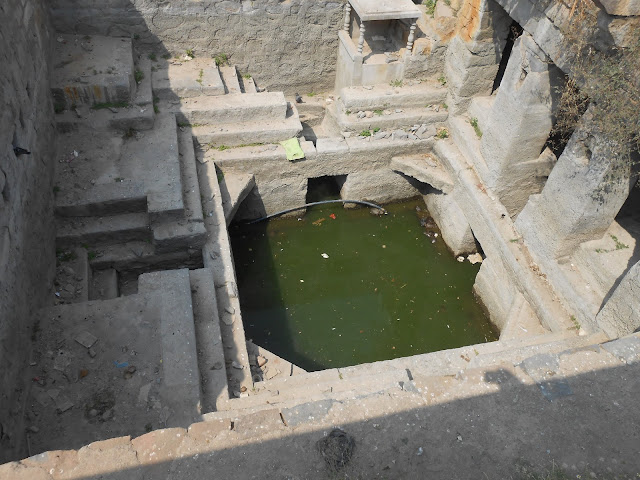
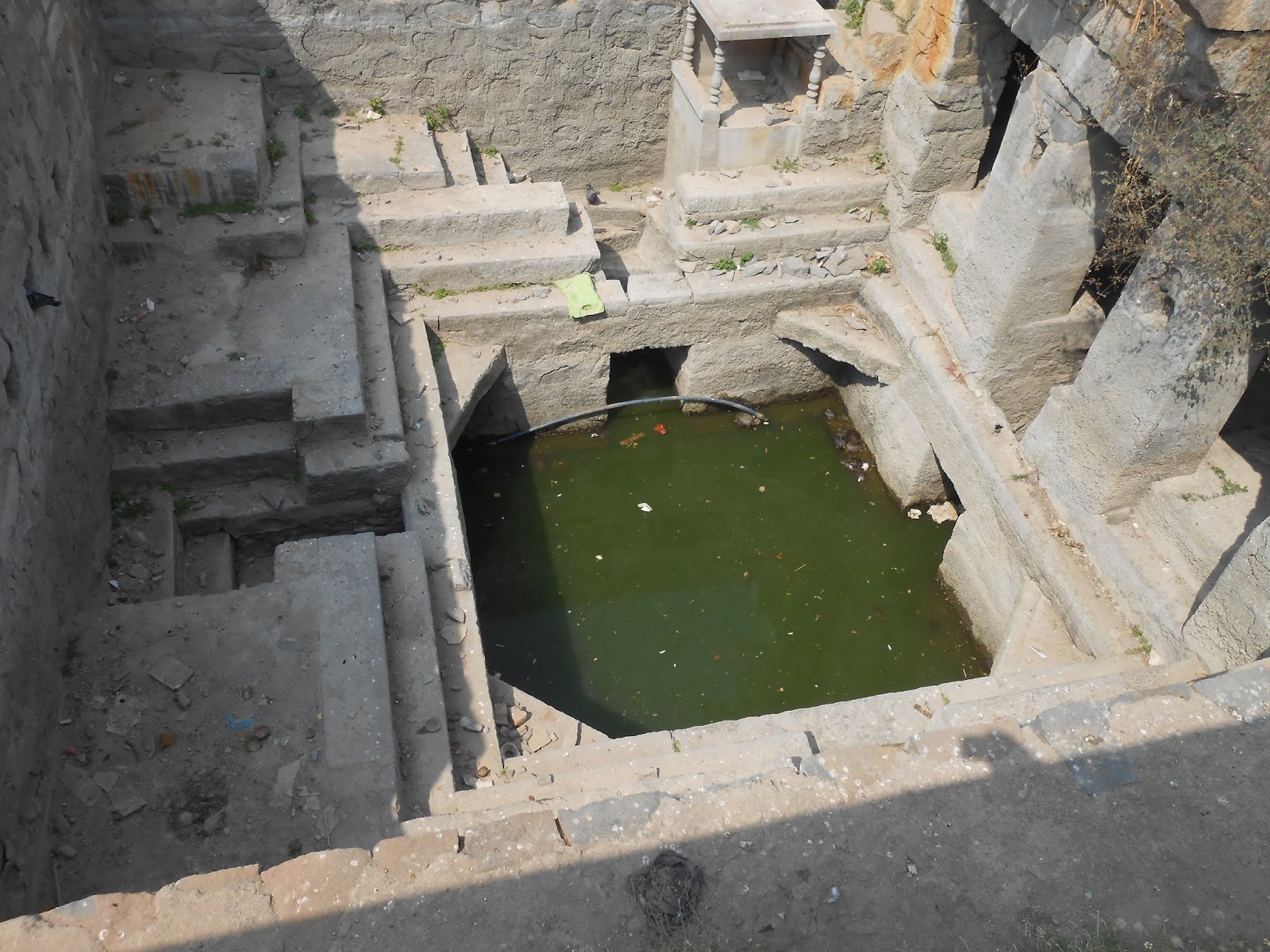
Talking about the restoration work, Narayana said the temple was covered in earth up to 7 to 9 feet over the years and this was completely removed bringing back the past glory of the temple. Other renovation work was going on. The temple has a beautiful step well which needs to be restored. Dr Kavuri Srinivas, who wrote a book on the temple history, says the Trikuta temple belongs to the Kakatiya period dating back to 10th to 13th century.

“Decoding of two shahasanas indicates that the temple was constructed during the period of Kakatiya king 2nd Pratapa Rudrudu by his minister Jayapasena. The Shiva Lingam is much older. There are several such beautiful temples at Nandi Kandi nearby and other places in this region. Originally the temple was housed in about 50 acres but over a period of time the area shrunk due to encroachments,” he explained.

The temple has a well carved step well which badly needs restoration. “We will take up its renovation once we get sufficient funds. We have renovated the temple and removed all the mud and debris that had sunk the temple over the years. If people cooperate, the temple and its entire complex will get back its past glory,” Narayana said. 


 Shivalingam
 Sri Venugopala Swamy
 Sri Anantha Padmanabha Swamy
 A view of  the temple
 Stone pillars
 Nandi idol
 Back view of the temple
 Sri Sita, Rama, Laxman and Hanuman idols
 Temple architecture
 Ancient stepped well
A view of the roof carvings

August 26, 2018

Sunday, 19 August 2018

JAIN IN TEMPLE KOLANPAK FOR MOKSHAA NOT FOR MATERIALISTIC BENEFITS


15 visits to Kulpak Jain Tirtha in TS will end all troubles of life.
Idol of lord Manikyaswamy.
 Idol of lord Manikyaswamy.
Hyderabad: This is one temple where one should seek only “Moksha” – complete purity of soul – but not materialistic benefits from God!
Kulpak Jain Tirtha kshetra in Telangana state is not only the biggest Jain pilgrimage centre in South India, but also the country and world. 

The 2nd century temple of Bhagwan Manikyaswamy, the first and foremost tirthankara out of the 24 tirthankaras of the Shwethamber Jain community, is also known as Rishabhdev or Adinath. 

Jains believe that 15 visits to Kulpak Tirtha on full moon days and performing seva, tapa and japa, will end all the troubles of their life!
The famed temple is located in Kolanupaka in Aler mandal of Yadadri-Bhuvanagiri district in TS, 80 kms from Hyderabad and 7 kms from Aler off the Hyderabad-Warangal highway. 

Besides the presiding deity or mulnayaka, Bhagwan Manikyaswamy, the architecturally beautiful ancient temple houses the precious jade idol of Bhagwan Mahavira, the 24th and last tirthankara, Neminatha and other Tirthankara idols belonging to the Shwethambar sect of the Jains who maintain the temple. 

Legends of the idol 

There are several stories on the formation of Bhagwan Manikyaswamy idol and temple. 

According to one story, the first and foremost tirthankara out of the 24 tirthankaras is Rishabhdev or Adinath Bhagwan. His eldest son, King of kings Bharat used to wear a finger ring made of “Feroza,” a precious greenish stone.

He got the image of Manikyaswamy engraved on the precious stone. He established Tirtha called “Astapad” as desired by people. 

Another mythological story is that Ravana’s wife Mandhodari, believed to be a Jain, worshipped the wonderful Swayambhu idol. It is said that she was worried about the safety of the idol when Ravana kidnapped Sita and feared the destruction of Lanka.

As per her suggestion, the idol of Manikyaswamy was immersed in the ocean. 

When a plague hit the region during the reign of King Shankera of Karnataka who was a follower of Jainism, the king prayed to Padmavati Devi who instructed the king to sprinkle holy water or snatrajal of the idol of Manikyaswamy on the victims to check the spread of the disease. 

On the instructions of Padmavati Devi, King Shanker retrieved the idol from the ocean and brought it on a bullock cart driven by calves. As desired by Padmavati, King Shankar Dev constructed the holy temple and installed the image of Manikyaswamy. 

The story of Kulpak 

The finding of Jain antiquities and the study of historical evidence indicate Kulpak rose to prominence as a Jain kshetra during the heydays of Rashtrakutas when Sankaraganda ruled over Kollipakaya-rajya in 9th century AD. It continued to enjoy the patronage of Rashtrakutas and their successors. 

Initially Kulpak was a military outpost and gradually grew into a prosperous, religious and key city spread over 90 sq kms with fortifications. It further flourished during the reign of the Chalukyas as a Jain pilgrim centre in the 11th and 12th century. 

The pilgrim centre was attacked by Rajendra Chola and his son Rajadhiraja, angry over the exodus of Jains from Tamil Nadu to Andhra. The Jains reportedly got protection from the Chalukyas. 

Over 20 Jain inscriptions were found in Kulpak which indicate the presence of a good number of Jain temples and bastis in the area. One inscription records the construction of Neminath and installation of Parasnath idol by Mahamandalesvra Kumara Mangideva, who belongs to Tintrini gaesha. 

Another dated 1107 AD records the gift of land in the village of Chapulia by Kumara Someshwara to Paraswanatha-Jinalaya.
Nagri inscriptions dated AD 1711 indicate Jainism flourished again during the reign of Mughal Bahadur Shah 1. 

In Jainism, the installation of “manastambha” in front of the temple is considered an auspicious act. Sri Kesiraja claims to have installed a manastambha and makara torana in the temple of Ambika, the sarandevi of Neminath Bhagwan, the 22nd tirthankara. 

An epitaph of Meghachandra-Siddhantadeva came to light on the wall of the Jain Mandir. This epitaph engraved in the 12th century states that Meghachandra took sanyas-diksha to enter Samadhi.
It was a practice for pious Jains to observe Sallekhana or sanyasa diksha at the fag end of life with the object of attaining “Samadhi—marana, sanyasa—marana or pandit marana.”

This reflects Kollipaka was considered a sacred tirtha kshetra where Jains observed sallekhana, a vow for terminating their lives. Endowed with richly carved temples and busadis, Jainism at Kulpak reached its glory during the 11th and 12th century AD under the Chalukyas. 

A pilgrim centre 

“Bhagwan Manikyaswamy temple in Kolanupaka is a world famous pilgrimage centre for Jains. The temple is powerful, hence devotees come here for meditation,” Surender Luniya, President, Jain Shwethambar Tirtha, Kolanupaka told this newspaper. 

He added, “Jains strictly believe in Karma and Moksha. God doesn’t give anything or take anything. The philosophy here is that you should not seek anything from God except Moksha. Moksha means liberation or salvation of a soul from samsara, the cycle of birth and death. Such a soul is called Siddha and revered in Jainism.” 

According to Luniya, the world famous 4-ft-tall greenish Jade idol which is considered as Bhagwan Mahaveera now might have been that of Bhagwan Manikyaswamy. “When someone put the value of the jade idol at 1,000 million dollars there was a surge of pilgrims. We appealed to one and all not to put a price tag on God,” Luniya said. 

“If you want fulfillment of materialistic desires, one has to pray to Goddess Padmavati Devi here. She is very powerful,” says Prakash Jain Munoth, a businessman and a regular at the temple. 

The Jain pilgrim centre has good facilities for devotees including 200 rooms for stay and meditation. Food is provided free of cost.
“Pilgrims come here round the year but more during Purnima, Chaitramas and other festivities. There is a surge of pilgrims from all over the world from September to December. The temple is open from 5.30 am to 1 pm and 4 pm to 7.30 pm daily” he explains. 

The temple is housed on a 25 acre plot of land. Besides idols of other Gods, there is a museum. There are 8 idols in the complex—Mahaveera, Neeminath, Pashwanath, Shantinath, Abhinandanswamy, Rishbdev and one idol of the 24 Tirtakaras.


Aug 19, 2018


Sunday, 12 August 2018

Jahangir Peeran: A dargah where no one stays at night


C R GOWRI SHANKER

August, 12, 2018
The 720-yr-old Dargah in Kothur mandal has various stories as to why it is deserted at night.
Located 45 km from Hyderabad, off the Hyderabad-Bengaluru Highway, it is one dargah which Hindus too visit in large numbers and offer prayers.
 Located 45km from Hyderabad, off the Hyderabad-Bengaluru Highway, it is one dargah which Hindus too visit in large numbers and offer prayers.
Hyderabad: A symbol of communal amity, 720-year-old Dargah of Hazarat Jahangir Peeran and Hazarat Burhanuddin in Inmulnarva village of Kothur Mandal in Ranga Reddy district is famous and has earned a unique place in the hearts of all sections of the people.
Both the saints had come to this place all the way from Baghdad, the capital of Iraq, to preach Islam and spread the message of love during their lifetime and breathed their last here. Their graves exist even today.


Dargah
One of the most visited dargahs, by Hyderabadis and devotees from all over the India and countries like Iraq, Iran, Pakistan, Saudi Arabia and many others, it has become one of the busiest pilgrimage centres as people believe their wishes will be fulfilled here!
Located 45 km from Hyderabad, off the Hyderabad-Bangalore Highway, it is one dargah which Hindus too visit in large numbers and offer prayers.There are various stories as to why the dargah is deserted at nights. It is said Hazrat Jahangir Peeran does not like to be disturbed by people at night and wants to live in peace.


Dargah

Another story goes that tigers visit the dargah at night and sweep the floors with their paws! “Apart from tradition, ages ago tigers used to prowl in the region and hence none dared to stay there after dusk. This trend continues even today even though tigers have vanished. The place is deserted after sunset. None has attempted to stay at night,” says Sultan Mohiuddin, Law Officer, Telangana State Wakf Board which manages the dargah.
He adds, “Even the staff has to leave the dargah by 9 pm except during the annual Urs. Earlier, the dargah used to be deserted even before sunset. Now it opens around 5 am and closes by 7.30 pm for devotees after the Magrib (Prayer), Fateha and Salam rituals.”

Dargah


People who come to this dargah have immense faith in the two saints and believe their wishes will be fulfilled. Many talk about miracles.
The annual Urs of the dargah, held on the first Thursday of “Til Sankranti” in January, attracts thousands of people from all parts of the state and country. From a small dargah and few people living around it, it has grown over the years. The tomb was constructed in 1975. The total area of the dargah was 2 acres and the Wakf Board purchased an additional 25 acres. The annual income has gone up to Rs 1 crore. The Telangana Wakf Board Chairman and MLC, Mohd Saleem, told this newspaper that as per the desire of the Chief Minister, the board was preparing a blue print for the development of the dargah and its surroundings at a cost of about Rs 60 crore. Among the major proposals are reconstruction of the masjid to accommodate Musallies during Friday prayers and Urs, 20 new Niyaz khana sheds, sandal khana, 3 shopping complexes, guest houses for VIPs and other pilgrims, surveillance and security system, modern slaughter house, drinking water facilities, toilets, drainage system, CC roads, bus shelters, beautification of the dargah and its environs, parking areas, welcome arches at Kothur bypass and Shadnagar road and other amenities for pilgrims. The Wakf Board has appointed 25 staff to oversee the maintenance of the dargah.
The dargah turns into a mela on Sundays when people from far and near come to the place using all means of transport, offer chaddar, flowers, sheep and goats, cook food and return home.
“About 300 sheep and goats are slaughtered on Sundays and other important days by devotees. Hence we are planning to have a new slaughter house to ensure hygiene.” Mohd Saleem said.
It is said the Mughal King Aurangzeb visited the dargah, popularly known as Jahangir Peeran dargah, and offered prayers.
CM K. Chandrasekhar Rao visited the dargah and offered chaddar on fulfillment of the separate Telangana state wish. He announced a grant of Rs 50 crore for development of the place which has been neglected over the years.
KCR had earlier visited the dargah when he was a Member of Parliament in the Lok Sabha from Mahabubnagar district and prayed for Telangana statehood.
Once a secluded place, the dargah and its environs now bustle with life. There are all kinds of shops including sweetmeat, food joints, general stores, cloth shops and other commercial establishments, parking lots, play areas etc.


Face trial by fire at 'Bhadrakali Sametha Veerabhadra Swamy' temple Bonthapally


Fire walk is conducted round the year at the Bhadrakali Sametha Veerabhadra Swamy temple to fulfil vows.


The entrance of the Veerabhadra Swamy temple at Bonthapally and Devotees walking on the fire.
 The entrance of the Veerabhadra Swamy temple at Bonthapally and devotees walking on the fire.
Hyderabad: The ancient Bhadrakali Sametha Veerabhadra Swamy temple at Bonthapally in Sangareddy district is a unique one. Fire walk is conducted at this place of worship round the year for devotees to fulfill vows.

Located in Veerannagudem gram panchayat of Gummadala mandal in Sangareddy district, about 40 kms from Secunderabad on the Narasapur road, the temple attracts a large number of devotees throughout the year, especially from the twin cities as well as other parts of the country.

In fact, Lord Veerabhadra Swamy, a manifestation of Lord Shiva, is the family deity of many Veerashaiva Lingayat, Vyshya and other communities.

The Kakatiya kings had constructed several Shivalayas and this is considered to be one of them. However, there is no evidence to show the architecture of that era.

The idol of the Veerabhadra SwamyThe idol of the Veerabhadra Swamy
“Though there is no shilasasanas of Kakatiyas, the temple is certainly of the Kakatiya era. Devotees of all communities have great faith in Lord Veerabhadra Swamy,” says Shivanagula Swamy, head priest of the temple.

Bonthapally village was once located in a thick jungle and even today nearby Narasapur is a forest belt. Devotees, in those days used to visit the temple on bullock carts and had to wade through rivulets.

Goddess Bhadrakali idolGoddess Bhadrakali idol
Presiding deity Lord Veerabhadra Swamy’s idol is made of black granite. He carries a sword, trishul in his right hand and “Gadha”, Damuru in his left hand. A Shiva lingam is located in front of the idol, where devotees perform abhishekam.

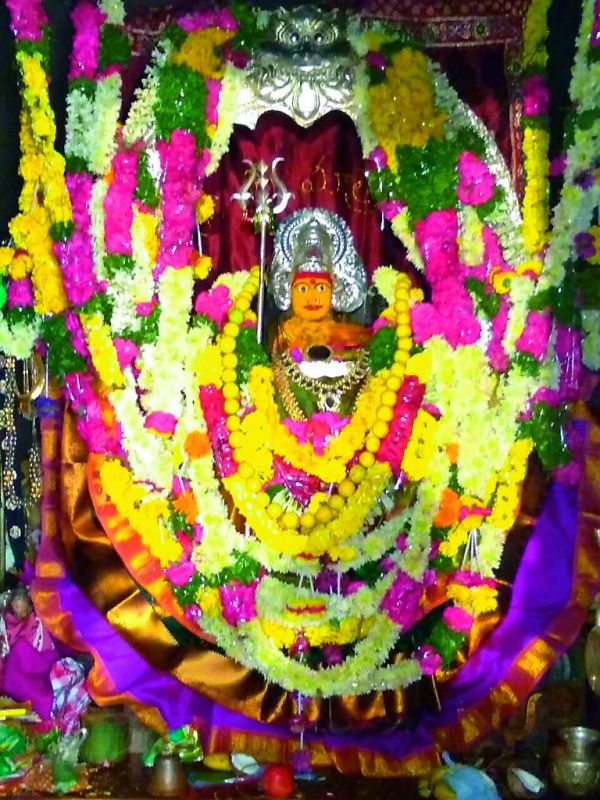
There is a temple for his consort Bhadrakali behind him, which is also unique as there are eight Sri Chakras in front of the goddess, where devotees perform kumkuma puja every day.

Newly married couples seek blessings from the God and Goddess, offer hair, rice, Ganda Deepam, Prastanam (part of the marriage ceremony of Veerashaiva Lingayat and some other communities), Bilwapatri among others.

Legend has it that some traders were travelling on bullock carts past this forest area years ago. The bullocks suddenly stopped and refused to move further. The traders were surprised and looked for wild animals but in vain. They decided to take a break. One of them dreamt that there was an idol of Veerabhadra in a snake pit and that it should be unearthed, cleaned, installed and worshipped. It would shower them with money and also bring them good luck. When the trader shared his dream with the others, they searched for the pit and finally unearthed the idol and installed it over there.

From a small temple, it grew in size, rebuilt as devotees thronged there from all over the state and country. Traders from Secunderabad and other places constructed choultries around the temple for the devotees to stay, some of which are in a dilapidated condition.

New choultries were constructed nearby by the Vyshya community and the Veerashaiva Lingayat Welfare Trust, where free food was served to devotees. “We provide affordable accommodation and free breakfast, lunch and dinner to devotees daily,” says Madapu Veeramallesh, founder and vice chairman, Telangana Veerashaiva Lingayat Federation.

On the eastern side of the sanctum sanctorum there is a 24 pillar mandapam. Besides the idol of Lord Veerabhadra Swamy, there is Kasi Vishweshwara Lingam, mula vigraham, utsava Vigraham, Ganapathi and Nandi idols.

The Bonthapally Veerabhadra Swamy temple is well-known for the unique (agnigundam) fire walk that is conducted round the year.

“Devotees to fulfill their vows conduct the fire walk. We make arrangements on payment of `1,116. It is done round the year, but more commonly on weekends. The temple is famous for Laksha Bilwa Archana, Shravanamasam festivities in August and September, Nitya Kalyanam, Abhishekam, Kumkuma Archana, Annapuja etc. Temple Jatara is conducted in Palguna Masam —March/April,” Matam Veeresham, executive officer, Veerabhadra Swamy Devasthanam told this newspaper.

The Devasthanam, which earns a revenue of `1 crore annually, is planning to construct a new Prakara Mandapam (massive compound with wall and gopurams) on the lines of Srisaila Devasthanam soon.

Ugadi, Vaishaka puja, Lakshapatri puja, Deepotsavam, Mahashivaratri and annual jatra, rathotsavam and other major Hindu festivals are celebrated in a big way at the temple. Bonthapally was once a hub for wooden toys also.

Considered a warrior God, Veerabhadra Swamy, whose temples exist in many parts of Telangana, Andhra Pradesh, Tamil Nadu, Karnataka and other parts of the country, was worshipped by rulers and soldiers during wars.
Lord Shiva took the fearful form of Veerabhadra to destroy the sacrifice of Daksha Prajapati and to check his arrogance. His consort is Bhadrakali.

There are many legends about Veerabhadra. According to one story, the goddess also known as Sati was born as Dakshayani to Daksha, son of Lord Brahma.

A great devotee of Shiva, Sati, was keen to marry Shiva. But her father disliked Shiva and invited many for the swayamwar barring Shiva.

Sati said to have thrown the garland in the air chanting Shiva and it landed around the neck of her chosen suitor. Daksha gave into her demand and married her off to Shiva, but severed ties with them. Daksha later conducted an Ashwamedha Yagna, which Sati attended despite Shiva not being invited.

Daksha spoke against Shiva and humiliated her. Unable to bear the humiliation, she jumped into the fire and immolated herself. A furious Lord Shiva went wild, plucked a strand of hair and produced Veerabhadra.

Fearsome Veerabhadra went to Daksha and slayed him. When his wife begged for his life, he placed the head of a goat on him and brought him back to life. Daksha regretted his action and became a devotee of Shiva.


                                                         Lord Veerabhadraswamy
                                         
                                                                Goddess Bhadrakali
                          Temple prepares for fire walk. Temple Gopuram in the foreground

                                                            Devotees undertake fire walk

Aug 5, 2018